
Lapins Cherry Tree
Prunus avium 'Lapins'View more from Cherry Trees
Lapins Cherry Tree
Prunus avium 'Lapins'


this item doesn’t ship to
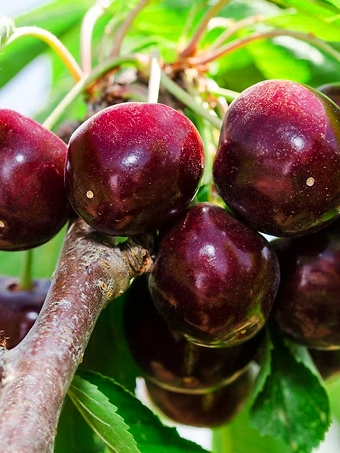
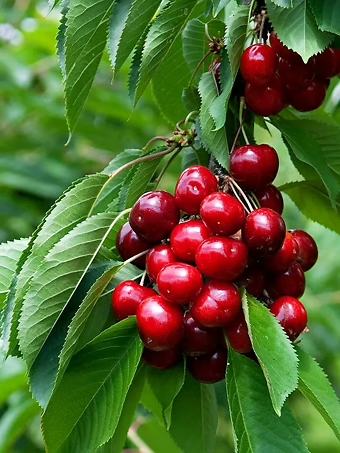
Sweet cherries are the best summer treat there is, but almost all of them need a second tree for pollination, and many of us simply don’t have the space for two trees. That is what inspired the late Dr. K. O. Lapiņš, a plant breeder in British Columbia, to develop the popular Stella Cherry about 50 years ago. Then he excelled himself, and created another, even better, self-pollinating sweet cherry, which when released was named in his honor – Lapins Sweet Cherry Tree. From the beautiful white blossoms on the bare branches in spring you will see what a great tree this is, and when you taste that first fruit – wow! This is a late-ripening variety, ready to pick from late June to early August, depending on where you garden and the season. The large fruits have deep-red skin and flesh, and are sweet as soon as they skin changes color, although best left to ripen further. A great advantage of this variety is its resistance to splitting, something common if there is rain while the fruit is ripening. You will harvest perfect fruit, whatever the weather. A perfect tree for a smaller garden, or for growing as an espalier on a wall, which is an excellent method for colder zones.
- Fully self-pollinating, needs no second tree for a full crop
- Large fruits have dark-red skin and flesh
- Ripens through July into August
- Very resistant to fruit splitting, caused by rainy weather
- Beautiful white flowers on bare branches in early spring
Plant your Lapins Sweet Cherry Tree in a sunny, sheltered spot, in rich, well-drained soil that isn’t too dry. Cherry trees enjoy dry, sunny summers, and grow from zone 5 to zone 8. Although some pest and disease issues are possible, this vigorous variety is generally easy to grow successfully. Excellent spread out on a south-facing wall if you are in zones 5 and 6. Prune as soon as the last fruit is harvested, removing 30 to 50% of growth, and developing a broad, open tree with wide branch angles to prevent splitting from the weight of the crop. An open vase shape with 4 or 5 main branches is generally the best shape, as it lets the sun in to ripen the cherries. Note that cherries don’t ripen further after harvesting, so ripen fully on the tree. Netting may be necessary at that time for bird protection.
Botanical Name:
Prunus avium 'Lapins'
Mature Width:
7-12 ft
Mature Height:
8-14 ft
Grows Well In:
Zones 5-8

Sun Needs:
Full Sun
Water Needs:
Low
Growth Rate:
Medium
Flower Color:
Pink, White
Flowering Season:
Spring, Summer