

Hill's Yew
Taxus 'Hilli'View more from Yew Trees
Buy in monthly payments with
on orders over $50.Prequalify now
this item doesn’t ship to
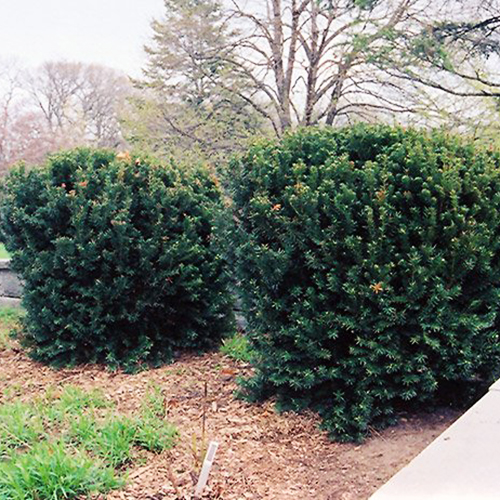
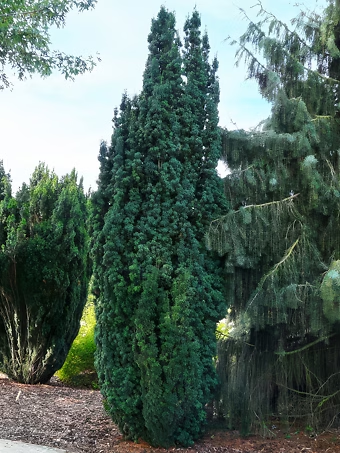
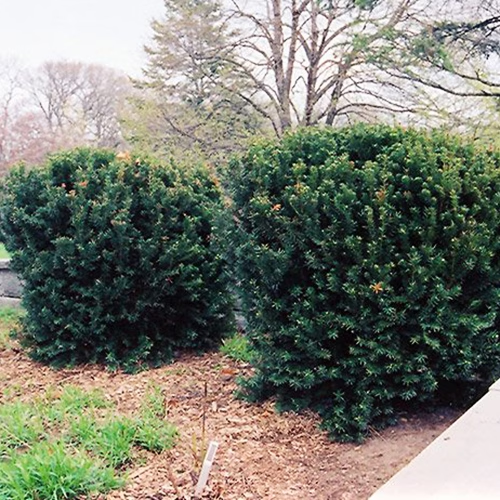
If you want to create a yew hedge – the gold standard for garden hedges – then you need to choose your variety carefully. Since most yews look the same when young, that can be tricky. If you want a thick, taller hedge, then Hill’s Yew is the ideal choice. Left to grow naturally it forms a broad, tall bush or even a small tree, up to 15 feet tall and 10 feet wide. That means it’s ideal for the tallest hedge, and the good width means it quickly fills in, making a dense, uniform wall of green. A yew hedge may take a little longer than cedar or arborvitae, but the extra time is worth it. Nothing clips so well, or becomes as dense, as yew, and the exceptionally dark color makes it a much better backdrop to flowers and other plants – they really stand out. You can also use this yew for topiary forms, especially those that need more width, or just grow it naturally in a corner or behind smaller shrubs. You will be surprised just how handsome a natural yew looks, and it can be trimmed up into an attractive tree as well. An essential element in the foundation planting around your home – trimmed or not – and a valuable evergreen for more shady parts of your garden as well as in full sun, this variety is one of the best all-round yews on the market.
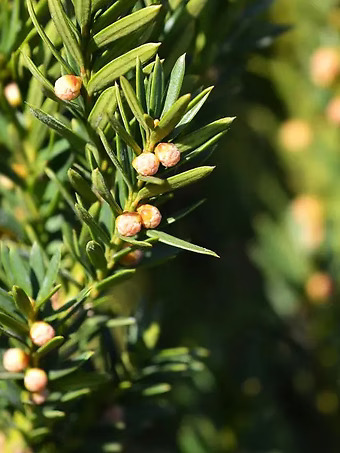
Hill’s Yew will give the densest growth in full sun, but it grows almost as well in partial shade. Even in full shade it does well, but won’t be as dense. Grow it in almost any soil, but good drainage is essential. Moist, rich soil gives the fastest growth-rate and the greenest leaves, but established plants tolerate normal summer dry weather with ease. It’s important to water young plants regularly during the first season or two, and to use good compost when preparing the planting area. For a tall hedge, over 6 feet, space plants 3 feet apart. For smaller hedges, 2-foot spacing is best. Deer don’t eat yew and it rarely has any serious pest or disease problems. This male plant doesn’t make those toxic red berries, but it does release pollen in spring, although much less on plants that are regularly trimmed. Trim anytime between spring and early fall, but avoid trimming during hot, dry weather – the more you trim the denser your hedge becomes. A great advantage with yew is that old, bare branches will re-sprout, so you can cut as hard as you want – that isn’t possible with other evergreens.

Botanical Name:
Taxus 'Hilli'
Mature Width:
5-10 ft
Mature Height:
10-15 ft
Grows Well In:
Zones 5-8

Sun Needs:
Full Sun, Partial Sun, Shade
Water Needs:
Moderate
Growth Rate:
Medium