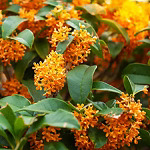
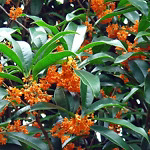


Orange Flowering Tea Olive
Osmanthus fragrans aurantiacusView more from Osmanthus
Orange Flowering Tea Olive
Osmanthus fragrans aurantiacus
Select size
Size Guideselect quantity
Buy in monthly payments with on orders over $50.Prequalify now


this item doesn’t ship to
The lovely Orange Flowering Tea Olive is a wonderful evergreen shrub that is more than worth the little effort needed for it to thrive in your garden. The ordinary tea olive is well-known for its wonderful fragrant flowers, which are the palest of yellows, but the rare orange-flowering form adds a great touch of color to an already great shrub. The oval, leathery, evergreen leaves, up to 4 inches long, are a deep green, and it forms a dense, rounded shrub that one day could pass 10 feet tall and up to 8 feet wide. Flowering typically begins around June, and continues sporadically, in waves, right into the fall, often triggered by periods of rain. The small flowers, in clusters, are a bright orange-yellow, with the same fragrance this plant is famous for, being sought after by parfumiers, and found in several high-end perfumes. A complex, rich scent, it seems a little like jasmine, but with fruity overtones, perhaps of apricots, tangerines or peaches. Popular with butterflies and other pollinators, curiously, it is repellent to bees – so you don’t risk being stung if you bury your face in it! Drop a few flowers into your tea, as the Chinese do.
Grow this excellent evergreen with other bushy evergreens in partial shade or full sun, perhaps blending them together in an informal hedge. Plant it at the corner of a path, or somewhere you can enjoy the delicious perfume as you pass by. This is truly an evergreen of quality, and a plant that belongs in every garden in mild areas – sadly it isn’t suitable for cool zones.
- A quality evergreen with great presence, forming a rounded bush of dark leaves
- Clusters of small, highly-fragrant flowers from June to October
- Flowers are bright orange-yellow, rather than the white-yellow of the normal bush
- Excellent for semi-shaded parts of your garden
- Only hardy from zone 8
Plant the Orange Flowering Tea Olive in full sun, or ideally in a place with sun for part of the day, and light shade otherwise. Plant it in well-prepared soil, well-drained and preferably moist, although once well-established, older plants have good drought tolerance – dryness does inhibit flowering however. Thrives in acidic soils, and may not do so well in strongly alkaline ones. Hardy in warmer parts of zone 8, and hardiness increases with age, so in zone 8 give some winter protection to plants during their first few winters. Generally not eaten by deer and free of pests or diseases of a serious nature. Can be lightly trimmed after the first display of flowers.
Botanical Name:
Osmanthus fragrans aurantiacus
Mature Width:
3-9 ft
Mature Height:
4-12 ft
Grows Well In:
Zones 8-10

Sun Needs:
Full Sun, Partial Sun
Water Needs:
Moderate
Growth Rate:
Medium
Flower Color:
Orange
Flowering Season:
Fall